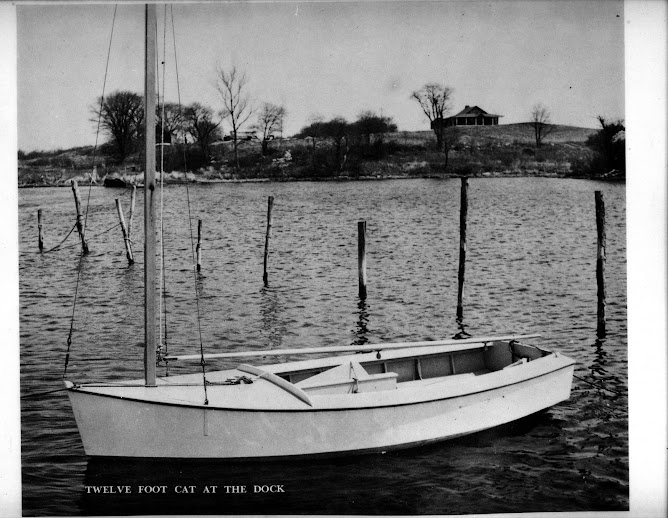
Follow me as I build a 12 foot catboat from plywood and pine. The boat was designed by Edson Schock in the 1940's. This is a project born of a desire to have another boat to sail here in Puerto Rico that will stand-up to the Trade winds. The sail plan will be changed to a gaff rigged sail. All the lumber is locally bought and pine will be substituted for oak, which is not readily available here. Marine plywood will be used.
Put the 2nd of 4 strips in to the frames to give the entire frame assembly stiffness and have a place to land and anchor the plywood sides and bottom pieces.
The next 2 strips will be about the same but now that I have a "system" for installing them, it should go fairly easy!
Some jobs are not very large but present their own set of unique challenges. The setting of the strips is a difficult job mostly for the complexity of the angles where the strips meets the stem or front of the boat. It took 2 cuts and a bit of fine tuning but I managed to get it fastened into the stem, as well as frames 1 & 2!
Prior to making the centerboard box, I removed 3 frames, #5,6 & 7, to make room to take the keel contour and fabricate the centerboard box. With the CB Box back in place, it was time to cut 4-3/4" from the center of these frames.
I then set each frame back in its place, having had marked their orinal positions on the keel and foundation, starting with #5.
In goes #6
Finally they are all back in. There are 1-1/2 x 3" blocks on top of the keel that I will install next to where each frame meets the CB Box. They will be glued and screwed into the 2 x 6 bedlog then I will glue and crew each frame into them for additional support. There are 6 to install. 2 on each frame. I cut 12 by mistake!
My hardware arrived today and I want to get teh centerboard box in place asap. I glued, screwed and bolted the centerboard box together this afternoon so I can prepare to mount it tomorrow.
With the headledges screwed and glued in place, it is time ti get the inside of the CB Box painted before I assemble the 2 sides together.
I am using an Anti-fouling paint that contains Cuprous oxide or copper powder suspended in the paint. It is a heavy can and the copper will discourage marine life from growing onto a surface, copper being toxic to most living things.
The paint requires almost constant stirring to ensure the copper remains suspended in the paint.
It goes on thick and I have taped off the area where the other headledge gets glued so that the surface remains clean.
I began gluing and screwing parts of the centerboard box today. I went slowly to get it right. I piloted holes for some 16 or so silicone bronze wood screws tro hold the side panels and bedlogs together.
I understand tat you should no countersink plywood but there are times when it cannot be avoided and this is one of those times.
I mixed a batch of glue, slathered it on to the 2x6 and waxed the screws, sinking them by hand with the bit brace.
It turned out right and tomorrow I will do the other side!
I love power planers! What a time saver it was. In a half hour, I trimmed her down to the lines that I took off the keel curvature.
I had about 1-1/2" to remove in the forward part and 3/4" of wood to removed in the back and what would have taken me at least 4 hours was accomplished in 30 minutes!
I cut 2 pieces of marine plywood and cut 2 pieces of 2 x 6 and added two 1 x 2-1/2" pieces of pine to form the centerboard box. The 1 x 2-1/2" pine go on either end to provide a space to fit the pivoting centerboard in.
The plywood panels assembled with the pine end pieces.
Cutting the 2 x 6's
After checking for the initial fit of the pine board to the plywood, I added the 2 x 6's to the form to complete the mock up for fitting into the slot I had cut into the keel.
I had already removed frames 5, 6 & 7 in order to be able to lift and place the keel box. I had chiseled and rasped the openings to widen and square them a little more to get the right fit.
Placing my hydraulic lift under the center of the box, I lifted it into position, plumb with the face of frame #4.
This is not the final position but serves to illustrate the concept about how I will now transfer a parallel curved line of the keel to the sides of the 2 x 6's to allow a nice watertight fit against the keel. I will shave that down with the power planer.
![[image]](https://lh3.googleusercontent.com/blogger_img_proxy/AEn0k_vXZYikRGJZZ1P-LqjeOJZfKR8_-4nQCKsYhEC6t_tUyjRY71MsxziHZ-t402-fqcryxqP9jFw_oK82flBOGvAd0lzEP_KUJaXNiJzp7-QKiPf5eLfTARI5gUXLW_B_GhIKbedKQj1jLMVdOTNjNA=s0-d)
![[image]](https://lh3.googleusercontent.com/blogger_img_proxy/AEn0k_sLKisM5XnTh0ruGUFB5_rBDI_a6AnuGB02gPTUit0T1GeeGxygmi-fe1eJ6Tk1uQXbQoq-0mW5c3EYvmOvuNkXKyEFHcWBX2_Ei5Rlf62ZO45G0glfpGquG33NuNIH4tvyV29dTvAgGCv4pQByAw=s0-d)
![[image]](https://lh3.googleusercontent.com/blogger_img_proxy/AEn0k_sXZN6vZr-laEz2en_e0ek49f9fpF7PjSig-T9ZwoKjypLgBffvFtBP9YHH2hK1w-1XkXDcIwjUHlwI2lnX3jCdNd_9GNRIxgQpojS0mSuKgvFvgI-SwPA9Gnd0Id9Oxn7vquLZZgRdh8dWTlwlgg=s0-d)
![[image]](https://lh3.googleusercontent.com/blogger_img_proxy/AEn0k_s59RGEBtJENHcWDLDVXvNFstnevOf3fI684x7fR1dUTmCMh-A9RS9IyDLu1zI760jiUtTiLDTLWupe-PjJ9Rhh5PML4F_snRwZEzOlV7v3pt6va23w1209nwO4ikMZprktsUGmYrxGrfo9uubl=s0-d)
![[image]](https://lh3.googleusercontent.com/blogger_img_proxy/AEn0k_szeqKhRtpRrZMDr7SCbdGIinD-D8WDKtGJw_Qfg3ZW4gGqyJ58Bf5qq4uKA1EKHe1A_w8dWG8x98ne0LZtawvjW4t6dOe2gZ9f1kxEd06gF441eYK8YoBF2rD_7D-YhyKOK56oZXv5bPOlQi83HA=s0-d)
![[image]](https://lh3.googleusercontent.com/blogger_img_proxy/AEn0k_vIt5OpJJOhfTswPBt01LP-3teTAV6TZdMoqjSUPLZPhkUkJx3qBHV8LKetH_mUCTX1gEqKSCljFqovK9tprJcOwLCw1yHUuo4ACdqLl9x-QwPG69xEoN8H3nQjC1EkZtTf5_aHo3LN3HrWCFx1TBw=s0-d)
![[image]](https://lh3.googleusercontent.com/blogger_img_proxy/AEn0k_vAu5EJptWXmUwuSIZAY3p6ojS9sD0a4DF6tZC_pP25FQET4M7zs3aNkyNNb9TXq6mBAtvjE_IkwIq-ZpCNwb-cKvNmdP_28i1DDuAU96xlm2HDXGryonOzadVzGU3fNAlGBJVwOKEqn7xecZVONTXs=s0-d)
![[image]](https://lh3.googleusercontent.com/blogger_img_proxy/AEn0k_u0BWEZY1tx_LeRj67Bs60402S0rpXFfUFkvKA043EJOUFnM7JDrh0EIUur4O8SjpTaeZkx4x4XcWsKSboFl3BmlAtmpkhCP-5YsgCrx8UiC_UJ9ZhxI8nJl5yNtormX-dkrY-dlNWt-bJ6OpEzmoc=s0-d)
![[image]](https://lh3.googleusercontent.com/blogger_img_proxy/AEn0k_slPX0GPks_NgApPUjZPfKLDIJxQyF-8U9uVWIUqb3kW6ze-aBCZKJfhTLT1X50lZ_cUX8ha5MKzw1STuTNC925GD_nza1zZVJB38u4F-6P3O3bhC7Bw5plXiqPI5p_OBOYhZDOA3mV91bbmgJa7mU=s0-d)
![[image]](https://lh3.googleusercontent.com/blogger_img_proxy/AEn0k_veKvDwqWSZ-rOqpAR5TdePtO_we4xaWjZg0PKE3PFk1_v8XJL95CxfBg7g8rKHf8yXOWpwBnuz-kmlktvwa6OFxHAF9VMSZFqhoDu1lDcWL5l4bS2FaekYW7cuFrt8VW_6xbHUk6vh-O07ifmvQLxd=s0-d)
![[image]](https://lh3.googleusercontent.com/blogger_img_proxy/AEn0k_spsfWxQhvnskVm-4oOmrMJNaKuwcHJrr8CuER_crUjBs01Gtn48NVShu5fFrik4jR3hoKSSoRoq5xPXFO_onIM2AmVKfUQX5geLvCGEKPPZCB3BYMhw_3iD_d-jfl8IuuQGGnHVvcD-mOadaqoVtE=s0-d)
![[image]](https://lh3.googleusercontent.com/blogger_img_proxy/AEn0k_uWH9Ux3QAb0GfN4mYCNcmBHBF65duQXWHxg00NgRw75fuZsqmEvyU90QOiyTSMBfulfG4c71U_2zFR9HsHwzVOIeuw4o8lP0JBGPEOm9-w_QPQ9WLHbMXxa0ZWo4lEMwpNNdQ54HuG6yK4j-rKqaQ=s0-d)
![[image]](https://lh3.googleusercontent.com/blogger_img_proxy/AEn0k_tczdNkShcXWcJKcy_B6WrRe1nygFczwrOtxqX5jZAicc6plR6-t8gELoDoAqZ5uh6g11SpZa-CL4MSWrXQl2Nx3zbU5sZlubuHHZBrmLemMhALlm7yW2B1EVdwfTdtiPJ4ADFaVF1F476cWjmsWHly=s0-d)
![[image]](https://lh3.googleusercontent.com/blogger_img_proxy/AEn0k_tiphVsCD30QvbD7tz1LPDmkXDEHoM8-cpk7YYmluotFsnlnWNDdju65wBSEsNpKRz-RbfHbOak59Wqee3OaZw-v1m3be51sS1YWssjjFJB37_M1vaQCRH731mVC7gAWVwUtxyf1vqBnqus_guvoQ=s0-d)
![[image]](https://lh3.googleusercontent.com/blogger_img_proxy/AEn0k_vQexynxyU0B1o-F4mYNiTjXOQi19zUXaqeJ6p8ONU4QbqyOsOvp7irZsr7kuWugakZniwKk01eDvV2S6e9iPRMy1brB7coeCANswTdgEJ5lMygYJY1RK5QwfYrEyRYf8WI4nqioF_L-J503_0nFGzv=s0-d)
![[image]](https://lh3.googleusercontent.com/blogger_img_proxy/AEn0k_vIRrpm8KZF8jqihOBUIK14uqNxV951UYSK95I2JoeDchOKJ1SExWncBq8FPdFdhixzcTY6SCaV0z2Q327YY9XydBeot_xKYNE1i4_yu7QPM6zPlYvhKTFoOtKllDuI5kWauCmE9qtt1YWKR-9gcqw4=s0-d)
![[image]](https://lh3.googleusercontent.com/blogger_img_proxy/AEn0k_tvhiKN0EmD4PPOxEILN1FF16Wi1zg46BCBEIzziM_BbqJuPEaKqwh71PiI1E9exvf07aTR7ldhwaBKUkM0PS9SC2awKa_AYDfIJ1M0r2dBK5LhMtZm_daKc5-vkXTxT_6j0NhDYG30nXlltho0bzt6=s0-d)
![[image]](https://lh3.googleusercontent.com/blogger_img_proxy/AEn0k_ueXfSEBpN_25dfBYWCZSlpROlHCRwkmEZQod_wVwBw_OxkHKw-g1c_MGTuSDpngBh0ItiuQiAFY0SL8BKlyjQI8K7VZfAwCZ6WJCENZbom85UFGvIvvpJS2Ides9LK4EFso73ORayPlxluRveR0w=s0-d)
![[image]](https://lh3.googleusercontent.com/blogger_img_proxy/AEn0k_sjegj0NB5rT48LLl2tGVVRswmbDvHNsyadHKq4LQ9jTbsaIIjB28Z9I0AaxFeqatkxvi5FninWY0zSki7ohZbsd-OwOAczz9tjYyknG4zZFELb5PcPppAqQjSYA0HE_MOYrokA2-ByrttxmjeS=s0-d)
![[image]](https://lh3.googleusercontent.com/blogger_img_proxy/AEn0k_t2vuP1Xz3kadfxkV1SnoYgf9z5FXyvm9jzPboJ8iNZSRdCqFaqtLZtqgjINkOzsvcJYE1NfQ7_x__WcFNv7pW4UNLa2cNFNPNXABpAH-5_9POePQNJwHE2XVIi1UsOjkHBPPQGtTgxADTy3sSZ=s0-d)
![[image]](https://lh3.googleusercontent.com/blogger_img_proxy/AEn0k_sMo_DLRTDMUxl6Q6AutXwZIFqBdosdFlm561ZgC0IlnRyEGk0OK__c5AdaOPU-RU9je-1NX4n_m8HSPC7Y-Y4zkCHw8NK2iQcJUHYbpZkCP69qSls660SnP3KSsOGfUOvvr-2odD2dqgVY8Pkx=s0-d)
![[image]](https://lh3.googleusercontent.com/blogger_img_proxy/AEn0k_sQ5LB4tijUAkZzN-5p69ptdCy_axenWe5yyaS-pLYx5ntGQV7fX5iy6KtAuQ2ylYMJ3Ud5aadOZZrJmYniBhX_-_9UdbEwlL5EHLgawv2MAfR5slH1VLN4hS_C-EuxG7clEGVVGfocCOtsqoB6pQ=s0-d)
![[image]](https://lh3.googleusercontent.com/blogger_img_proxy/AEn0k_tz9gGYrm56DOWqLX8gwGdSTajukDR3MrqUsj2SZl57xHww8aLvY1LN-F9gQlh5e-dcuoAMI8kKhzAW4egbKWdX5f0vAAaQvFEXl4K0BL1UiVvp-2psuL9Jqb7QQGZNevpdK0Rry25zhOE1O92L=s0-d)
![[image]](https://lh3.googleusercontent.com/blogger_img_proxy/AEn0k_snPXqbmJQk87jnrdI_e6L9jkB3eb2mNac4VdKMzkUQ4aOdHVjFYpgrwb_ltxDVntNTcJpj_JoaI64SX8SZOIX6DZ6j82aLndOHFAuIg8Ua1uTTxrCOy6VG8FPtGJR2v2Rri752WpHYmt5XRHqAQ63o=s0-d)
![[image]](https://lh3.googleusercontent.com/blogger_img_proxy/AEn0k_vrNk9TRxwWo5_hRBtbIVpFsuInWtdjquWWnx5Z2cajD9lXly-O2JTqiIkhqivbD_roIM5aukqhVmlrWz1vjx_sAwyiVbn65keG9rPb_mKMWDuUEmH4FyjWnYBQHb0aq68L2-NVVAZwx-xnHQ9-0A=s0-d)
![[image]](https://lh3.googleusercontent.com/blogger_img_proxy/AEn0k_vTnT7tvtabCkMMHet6Y3yarEcwyo06Sa2L-59_pTTijnHTxpBRm08sy-UKZi1r7EW9VVnLT139-w3ajAeFSQtExHgC3UgHMCLCPr26vFlNj3B1-C4osqgCKwmMMZb5utR--54P5ciiZ-EC3JFr=s0-d)
![[image]](https://lh3.googleusercontent.com/blogger_img_proxy/AEn0k_v4FgKPpTaIo8-BqGBvq6vhzA_1jzXPgBSUfvs7e97IuMdF_jF6280JuoGhGBxwxqdmLEcDeSVbYq7KUM0adOFduIZvb6tyw4cnUB-SGq9nl6hmcNnHLYFdh4XXdGMWL4-OVaFrZJrcc5O7wmIg4w=s0-d)

![[image]](https://lh3.googleusercontent.com/blogger_img_proxy/AEn0k_uEeUAodO-nHg8KUzVtaLtG3Q8KRt8Jh1BXCTaLQH8E2znqyoKLJyAMaMGjIbdvnXdjSxVbuoHwzRqssRzfPebuBql1g4SsZeT7djGWeQwVaXx9wSkFLtgusHYtIUsZoDBFEpXF_pFuYeABkev25g=s0-d)